Windows on Arm Gaming Tested: How Does NVIDIA's RTX Spark La…
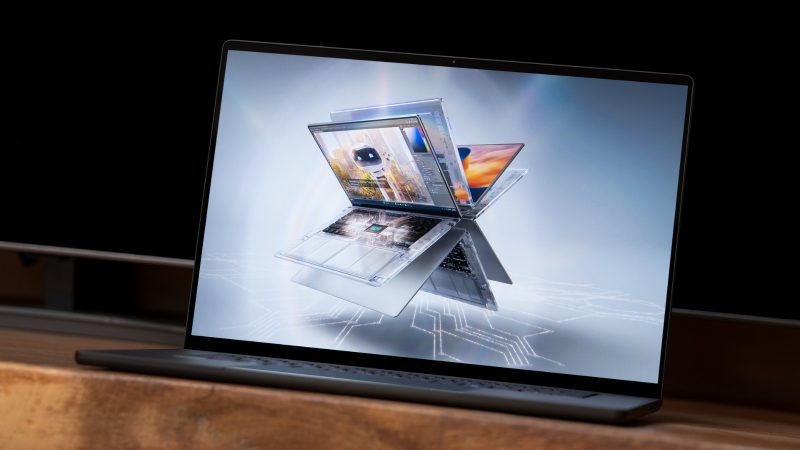
This launch signals a major step for Windows on Arm gaming, offering desktop-class GPU performance in a thin laptop, though x86 emulation still poses challenges for some titles.
This launch signals a major step for Windows on Arm gaming, offering desktop-class GPU performance in a thin laptop, though x86 emulation still poses challenges for some titles.
Key points - NVIDIA RTX Spark N1X superchip combines Blackwell GPU and 20-core Arm CPU, debuting in laptops. - ASUS ProArt P16 H7607 test unit features 64GB unified memory, 1TB SSD, 16-inch 3K 120Hz OLED. - Most AAA games run at 120+ fps at 1440p with ray tracing, DLSS, and 6x frame generation. - Four games faced launch issues: Rainbow Six Siege, Battlefield 6, F125, and Red Dead Redemption 2. - Unified memory allows manual VRAM adjustment, with 30.5GB allocated to GPU by default.
Timeline - COMPUTEX 2026: NVIDIA announces RTX Spark superchip. - 15th (current month): RTX Spark laptops officially launch.
FAQ
Q: Can I play all my Steam games on an RTX Spark laptop? A: Most AAA games run well, but some x86 titles may have launch issues or performance bottlenecks due to Arm emulation.
Q: How does the RTX Spark GPU compare to desktop GPUs? A: The Blackwell GPU has 6,144 CUDA cores, similar to a desktop RTX 5070, but built on a more advanced 3nm process.
Q: Can I upgrade the RAM or storage? A: The ASUS ProArt P16 has two M.2 2280 slots for SSD upgrades, but unified memory is soldered and not upgradeable.
📰 Related Articles
NVIDIA RTX Spark Laptops Are Here: A New Era for Windows PCs
NVIDIA's RTX Spark laptops have officially launched with up to 128GB unified memory and 1 Petaflop of AI performance, bringing local AI agents and serious gaming to slim Windows machines.
Microsoft May Revive Windows 95 Classic 3D Pinball for Windows 11
Microsoft is reportedly evaluating a nostalgic plan to bring the classic Windows 95 game 3D Pinball back to Windows 11, though licensing limits mean it would likely return only as a built-in feature.
CDPR Drops Windows 10 Support for The Witcher 3 and Cyberpunk 2077
CD Projekt RED has stopped testing The Witcher 3 and Cyberpunk 2077 on Windows 10, and the 2027 Witcher 3 DLC won't run on the old OS.
NVIDIA Pulls the Plug on Windows 10 Game Ready Drivers This November
NVIDIA confirms its final Windows 10 Game Ready and Studio drivers land in October, with November onward going Windows 11-only. Here's what it means for your rig.
Star Wars Galactic Racer's devs tested its roguelite progression syste
Years ago, I read that Jake Solomon prototyped the Firaxis r…
Control Resonant DLSS 5 Tested: Stunning Visuals, Brutal Performance Cost
A new GameGPU test force-enables leaked DLSS 5 in Control Resonant across RTX 3060 to RTX 5090, revealing massive visual gains but crippling frame rates even on flagship GPUs.