AMD's Ryzen AI Max PRO 400 Brings Agentic AI On-Prem
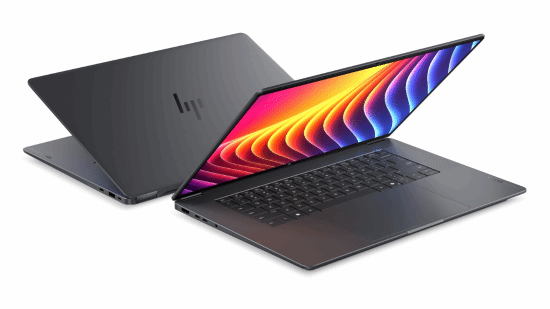
AMD partners launch new systems powered by Ryzen AI Max and Ryzen AI Max PRO 400 series processors, giving enterprises a local platform to build and run agentic AI while balancing cloud and on-device workloads.
AI agents aren't your average chatbots. Instead of just answering questions, they can carry out complex, multi-step tasks across different apps, take certain actions on their own once configured, and keep grinding on long projects even after you've moved on to something else.
For businesses hoping to squeeze more value out of AI, that ability to analyze information and act on it is seriously appealing. But as both cloud and local AI evolve fast, IT teams are stuck with some very real questions: where should agents run, what company data can they touch, and how do you roll these capabilities out to employees without burning through the budget?
Good news: AMD partners have already rolled out new systems packing AMD Ryzen AI Max and Ryzen AI Max PRO 400 series processors, giving enterprises a fresh option for developing and deploying enterprise-grade AI right on-site. With up to 16 "Zen 5" CPU cores, a 55 TOPS NPU¹, 40 GPU compute units, and a massive unified DRAM memory pool, these machines are built specifically for local agentic AI.
So what does running enterprise AI agents locally actually take? More than just a base model. Dev teams may need to connect models to internal documents and code repositories, build retrieval-augmented generation apps, evaluate different models, create tools and connectors, test agent behavior, and figure out which workloads stay local versus which go to the cloud. The Ryzen AI Max PRO 400 series gives that whole development cycle a local home. Its high-performance CPU cores, integrated graphics, powerful NPU, and large unified memory pool work together to support model development, orchestration, prototyping, and execution on a single system. The platform natively supports Windows and Linux, while the broader Ryzen AI software ecosystem covers popular tools and frameworks like PyTorch, vLLM, llama.cpp, Ollama, ComfyUI, and LM Studio.
Now, should AI agents run locally or in the cloud? It's often framed as either-or, but the Ryzen AI Max PRO 400 series pushes a different idea: let cloud and local AI resources coexist in the same deployment strategy. Frontier cloud models still matter when a workload needs capabilities local models can't deliver. In other cases, though, a local system can handle some or even all of the work. HP, for example, pairs the new AMD Ryzen AI Max+ PRO 495 processor with Perplexity Portable Computer in the HP ZBook Ultra G3a 16. That setup can run local models and agents alongside professional apps, and users can tap cloud models if a specific step needs frontier intelligence.
Local execution also gives organizations tighter control over where proprietary data gets processed. Agents working with internal docs, engineering files, source code, or other sensitive info can handle appropriate tasks on local systems without shipping every request and work document off to an external inference service. And from an economic angle, a hybrid split is worth considering too. Agentic AI can chew through an enormous number of tokens, way more than chatbots, because completing a single task may involve repeated reasoning, corrections, information retrieval, and model calls. With cloud inference, every one of those operations turns into an ongoing cost.
AMD's Tokenomics Calculator helps organizations estimate the potential cost of pure-cloud, pure-local, and hybrid AI deployments based on expected user count, token consumption, hardware needs, and cloud model pricing. As shown in the chart above, after a relatively short period (6 months), cloud costs can significantly outpace local AI.
Hybrid deployment lets businesses reserve cloud inference for workloads where the capability justifies the expense, while running other tasks locally. With the Tokenomics Calculator, IT teams can evaluate the impact of different mix ratios instead of treating local and cloud AI as mutually exclusive. Enterprise agents are moving from experimentation into production. As Ryzen AI Max 400 series and Ryzen AI Max PRO 400 series systems reach customers, AMD is driving that shift with significantly boosted local compute and memory capacity, giving businesses more platforms to build AI on, more places to deploy it, and stronger control over where the work actually happens.
Curious how AMD-powered Agentic PCs can support enterprise workflows? Check out the commercial systems available now. What would you want your local AI agent to handle first?
📰 Related Articles
Zelda: Ocarina of Time Remake Brings 29 Changes You Need to See
Castle Town got a huge upgrade: full third-person camera control, no fixed angles, and seamless walking from the entrance to the Temple of Time without loading screens. A new blonde NPC warns you not…
Project TAHITI’s ‘biggest update ever’ brings new modes, balance chang
to the game. And for some very good reason. Some [… ]
Dungeons and Dragons Online’s Update 82: The Court of Strahd brings a
]
Nvidia Brings DLSS 5 to Hogwarts Legacy, but Some Fans Can't Tell the
ve seen of DLSS getting modded into games, the Hogwarts Legacy examples Nvidia shared in its blog are a lot more subtle. Rather than completely changing the way characters look, like it did when DLSS…
Neverwinter brings in a new battle pass phase and fixes Red Harvest it
Apart from the Harvester of Nightmares event happening this month, Cryptic activated a new phase of its battle pass with plenty of bonus rewards. The nine milestones of this battle pass offers both fr…
Astral Ascent's Free Update Brings Expedition 33 Characters…
This crossover gives Astral Ascent players fresh content and introduces Clair Obscur: Expedition 33 characters to a new audience, potentially boosting interest in both games.