Sony's Quiet PS5 Slim Revision: Cheaper to Make, Not to Buy
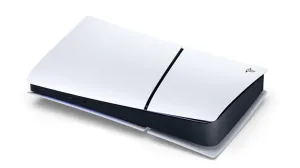
Sony has quietly revised the PS5 Slim with a new motherboard that cuts costs and improves repairability, but don't expect a price drop—the console has only gotten more expensive since 2020.
Did you notice Sony quietly tweaking the PS5 again? A new revision of the PS5 Slim has been spotted, and it's all about making the console cheaper to produce and easier to fix—but don't expect that savings to land in your wallet.
The changes, uncovered by Modyfikator89, focus on the motherboard. The redesigned board gives easier access to the CR2023 battery, and the streamlined internal layout makes repairs less risky. It's a welcome shift for anyone who's ever cracked open a console and prayed they wouldn't break something.
Sony also borrowed a page from the PS5 Pro playbook. The new model features refined liquid-metal containment and revised heatsink materials. In theory, that updated barrier around the processor die should keep the liquid metal better contained over time, ensuring stable thermal transfer even under heavy loads. That's good news for longevity—especially if you're the type to marathon sessions.
There's also a newer, lower-cost HDMI retimer chip on board. That likely cuts down bill-of-materials costs and improves display signal stability. Overall, Sony is probably lowering production costs while maintaining higher assembly yields—a smart move when sourcing components has become more challenging.
But here's the rub: companies routinely make stealth revisions to cut manufacturing costs, yet unlike previous console generations that shrank and got cheaper over time, the PS5 has only gotten more expensive since it launched in November 2020. The entry-level PS5 Digital Edition started at $400, but in 2026 you can expect to pay $600. The base model with a disc drive jumped from $500 to $650, and the PS5 Pro shot up from $700 to $900. Ouch.
So why the revision? Sony is aiming to make the PS5 a better value proposition as it heads into the lucrative holiday season. It recently launched a new AI-upscaling technology for base-model PS5s, called Quick Spectral Super Resolution. Only two exclusives support it right now—Marvel's Wolverine and Ghost of Yotei—but the tech will be released to more developers soon. By enabling the base PS5 to deliver sharper visuals without needing the pricier PS5 Pro, Sony offers a visual upgrade in select games.
Will these internal tweaks ever translate to a price cut for you? That's the million-dollar question. For now, it seems Sony is focused on cutting its own costs, not yours. What do you think—should Sony pass the savings on to players, or is this just business as usual?
📰 Related Articles
PlayStation Hong Kong's Fall Adventure Sale Is Live With 1,776 Deals
PlayStation Store's Hong Kong 'Fall Adventure' sale runs until October 7, with 1,776 games and add-ons discounted, including Assassin's Creed 4: Black Flag Resynced and Halo: Campaign Evolved.
PlayStation's Huge Upcoming Lineup Leaked: God of War, Wolverine & More
A new roundup reveals over a dozen PlayStation projects in development, from Santa Monica's God of War titles to Insomniac's Wolverine and Spider-Man 3.
Ex-PlayStation Boss Doubts You'll Spend $1,000 on PS6
Shawn Layden questions whether gamers will pay around $1,000 for next-gen consoles if the leap is just better ray tracing and more teraflops.
Ex-PlayStation Boss: GTA 7 or a Chinese Game Could Top GTA 6
Former PlayStation executive Shuhei Yoshida says the next gaming phenomenon after GTA 6 could be GTA 7 — or a game from a Chinese studio, warning that no one should underestimate Chinese companies.
PlayStation Stars Shuts Down November 2, 2026 - Spend Your Points Now
Sony has confirmed its PlayStation Stars loyalty program will permanently close on November 2, 2026. Points will be wiped after that date, though digital collectibles stay in your account.
Ex-PlayStation Boss: Game Pass Profits 'Impossible' for Devs
Former PlayStation executive Shawn Layden says developers can't profit from subscription services like Xbox Game Pass, especially with day-one launches. He argues the model only benefits the platform, not creators.