OnexPlayer 3 Review: Intel Arc G3 Ushers in a New Handheld Era
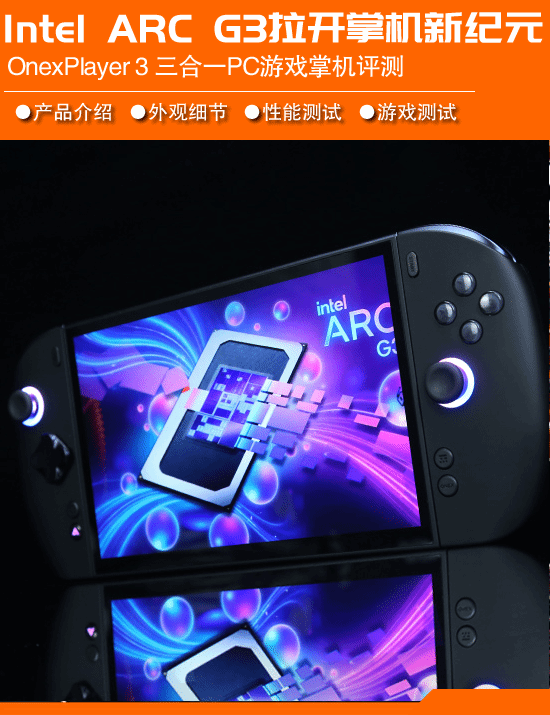
OnexPlayer 3 is among the first gaming handhelds powered by Intel's new Arc G3 series SoC, and it also transforms into a mini laptop or tablet.
Intel is officially throwing its hat into the handheld ring. Back in June at Computex, Team Blue unveiled its first SoC built specifically for Windows gaming handhelds: the Intel Arc G3 series. Now the first devices packing that chip are starting to land, and the OnexPlayer 3 is leading the charge.
So what makes the Arc G3 special? It's based on the Panther Lake architecture and an advanced modular tile design, but Intel didn't just shrink a laptop chip and call it a day. The company trimmed the core count, rebuilt the power management, and streamlined the I/O specifically for handheld use. The goal is simple: keep power draw low while pushing higher frame rates and longer battery life than you'd normally expect from a portable PC.
The OnexPlayer 3 is the first wave of hardware to put that promise to the test. The model we're looking at comes with the top-tier Intel Arc G3 Extreme processor, paired with integrated Intel ARC B390 graphics, 24GB of LPDDR5x memory, and a 1TB PCIe 4.0 SSD. On paper, that's a seriously beefy spec sheet for something you can hold in your hands.
But the OnexPlayer 3 isn't just a gaming handheld. It supports three distinct modes: gaming handheld, mini laptop, and tablet. That flexibility means you can game on the couch, dock it for a desktop-like setup, or detach and use it like a slate. It's a clever way to squeeze more value out of one device, especially if you want a portable PC that does more than just run Steam.
The real question, of course, is how it all performs. How does the Arc G3 Extreme handle actual games? Does the new architecture deliver on its low-power, high-frame-rate pitch? And does the triple-form-factor design hold up in daily use? Those are the things we're digging into right now.
Stay tuned for our full breakdown, where we'll put the OnexPlayer 3 through its paces and see whether Intel's handheld gamble pays off. If you're in the market for a Windows gaming handheld, this is one you'll want to keep an eye on.
What do you think? Is Intel's Arc G3 enough to make you consider a handheld over a Steam Deck or ROG Ally? Let us know in the comments.
📰 Related Articles
OneXPlayer's New $2K Handheld Pushes the Arc G3 to the Limit
OneXPlayer unveils the X2 Mini, a pricey handheld with Intel's Arc G3 chipset, joining the Arc G3 lineup at nearly $2,000.
Open-Box ROG Xbox Ally: A Glimmer of Hope for Handheld PC Prices
Handheld gaming PCs are having a rough year, but open-box ROG Xbox Ally stock offers a cheaper way in. Here's why it matters.
PS6 Leak Roundup: 2027 Launch, Detachable Disc Drive, and a Handheld
Fresh leaks point to a 2027 holiday window for PS6 and a native-playing handheld codenamed Canis, but soaring component costs could push the price toward $1,100-$1,200.
Retroid Pocket Duo Lite: $149 Dual-Screen Handheld Revealed
Retroid has unveiled the Pocket Duo Lite, a $149 dual-screen handheld with IPS displays and lightweight 3DS capabilities, sitting below the $269 Pocket Duo.
Former PS Boss Warns: Don't Launch PS6 Handheld With Console
Shawn Layden suggests Sony should skip a home console if PS6 handheld rumors are true, citing struggles selling two hardware pieces simultaneously.
Still Playing N64 in 2024? Here's How I Do It on Original Hardware, FPGA, and Handhelds
From original consoles to 4K remakes and handheld emulation, here's how I still enjoy N64 games 30 years later.