Micro Center Now Makes You Sign a Form to Buy an RTX 5090 Prebuilt
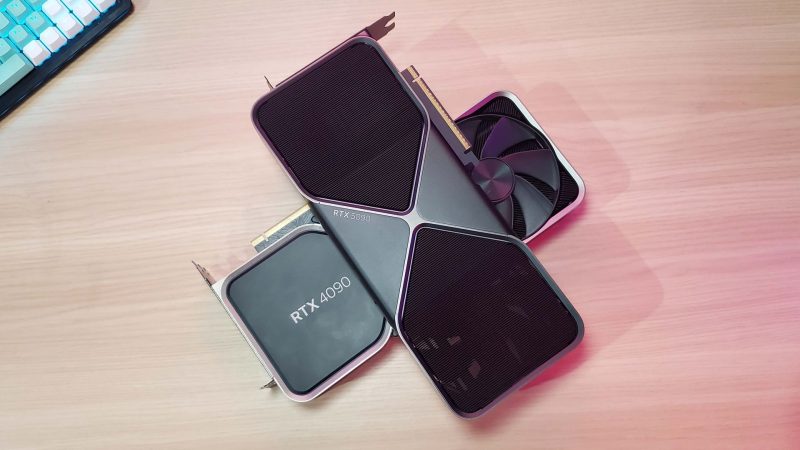
Micro Center is reportedly requiring customers buying prebuilt PCs with RTX 5090s to sign a declaration promising not to export the GPU, plus show ID. Here's what that means for you.
Ever tried to buy an RTX 5090 lately? If you have, you know it's a nightmare. And if you're thinking of grabbing a prebuilt gaming PC from Micro Center just to get your hands on one, you might be in for a surprise: you'll have to sign a form promising you won't export it.
According to a Reddit user named Krothic, who recently bought a Powerspec Ai90 prebuilt with an RTX 5090 from a Micro Center in Tustin, California, the store is now handing out an anti-export declaration. The manager told them the policy only kicked in a few days ago. So this isn't some old rule—it's brand new.
Why the sudden crackdown? High-end GPUs like the RTX 5090 are banned from being exported to China, as the US tries to stay ahead in the AI race. More powerful cards in China means more computing muscle for AI development, and that's something the US wants to prevent. But the ban has had an unintended side effect: it's now incredibly hard to buy an RTX 5090 on its own. On sites like Newegg and Amazon, the only listings are from sketchy third-party sellers with names like 'sdflkjahsdgasdggbsd'. So for those looking to export, full prebuilt PCs became the loophole.
Micro Center is trying to close that loophole. The form requires buyers to state, "I am purchasing this product for my own legitimate personal or business use in the United States, or I have accurately identified the actual end user above." The Redditor also had to hand over their driver's license to verify their identity, linking the purchase to their name. If that GPU later ends up shipped overseas, Micro Center could theoretically trace it back via its serial number.
But let's be real—how enforceable is this? If someone buys a prebuilt, they could later sell it or give it away, and the GPU could still end up abroad. And if an exported card is traced back, the buyer could simply claim it was stolen. The declaration itself might not be much of a deterrent. The real hurdle is probably the ID check. If you're trying to export cards in bulk, you're not going to want to hand over your legal name to a company that can tie those purchases back to you.
Still, it's another barrier to entry for regular gamers. It's already tough to buy high-end hardware thanks to scalpers and price gouging, and now you might have to sign paperwork and show ID just to get a prebuilt. Some brands are even making customers prove brand loyalty to buy certain tech. It's all a bit much, isn't it?
So what do you think? Would you sign a form and show your ID just to buy a gaming PC with an RTX 5090? Or is this a step too far? Let us know in the comments.
📰 Related Articles
Sapphire's New Prebuilt PCs Are All-AMD, Zero-Hassle Gaming Rigs
Sapphire launches full AMD prebuilt gaming PCs with its own motherboards and GPUs, offering stable, quiet performance and unified after-sales support.
GTA 6 Takes Over Miami: Giant Letters Airlifted to Kaseya Center
Rockstar's GTA 6 marketing hits Miami with a massive 'Welcome to Vice City' sign, a nearly $1 million ad deal, and a new album—but not everyone's happy.
FF7 Revelation Gamescom Trailer: Weapons Take Center Stage
The latest trailer for Final Fantasy 7 Revelation focuses on the massive Weapons, showing off their larger role in the trilogy's finale, plus new gameplay details.
GTA 6 Takes Over Miami's Kaseya Center with Glowing Vice City Sign
Rockstar's GTA 6 marketing stunt lights up Miami's Kaseya Center with 'Welcome to Vice City' and 'VI'. The $1 million takeover faced local pushback but was approved 4-3.
Xbox Is 'In a Pickle' Because Microsoft Never Picked a Lane, Says Ex-PlayStation Boss
Former PlayStation boss Shawn Layden says Xbox's struggles stem from Microsoft's inability to stick to one strategy, citing exclusivity flip-flops and Game Pass tensions.
Micron CEO Warns Memory Shortage Will Get Worse Through 2028
Micron's CEO says memory and storage supply will be much tighter in 2027 and 2028 than in 2026, driven by AI demand. That means continued price hikes for PC and console hardware.