How Vault Boy Saved Fallout: The Iconic Mascot's Origin Story
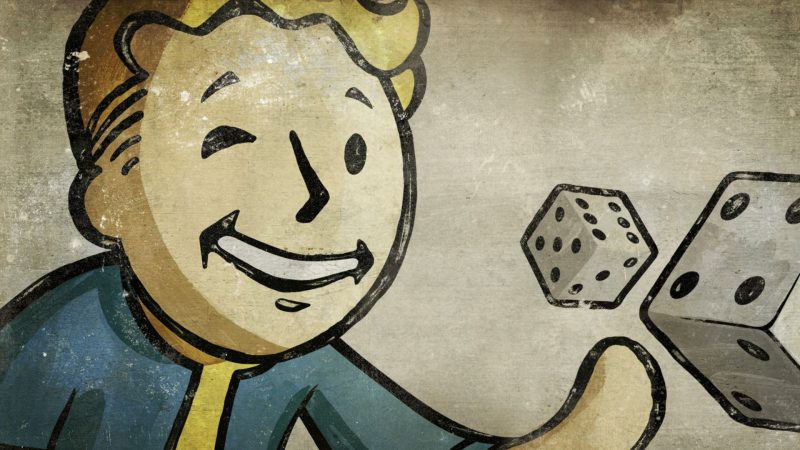
Fallout's Vault Boy was created to solve an icon problem in the original RPG, but Steve Jackson's dislike of it led to the SPECIAL system.
Ever wonder why Fallout's Vault Boy looks like a cheerful cartoon character in a wasteland? The answer is a fascinating mix of design challenges and creative problem-solving that shaped the entire series.
Back in the original 1997 Fallout, the game was supposed to use the Generic Universal Role-Playing System (GURPS), a tabletop RPG system from Steve Jackson Games. That meant tons of skills, advantages, disadvantages, and quirks—all needing icons so players could understand them at a glance. "For every single one of those characteristics, we had to make an icon," explains Tim Cain, lead developer of the original Fallout, in a new YouTube video. The task fell to artist Arlene Summers, who had to create over a hundred, maybe close to 200 icons, according to Cain.
But there was a problem: Cain was losing his color vision, so he told Summers not to rely on color to differentiate the icons. As the number of icons grew, making them distinct enough became nearly impossible. That's when art director Leonard Boyarsky had a brilliant idea. Instead of simple icons, they'd use a cartoon character performing the action or embodying the attribute. Boyarsky referenced Monopoly's rich uncle Pennybags and sketched it up. Everyone loved it.
Artist George Almond refined the design, and fellow artist Tramell Ray Isaac drew hundreds of these Vault Boy icons. "If you're going through Fallout, they appear in the skilldex. They're all over the manual. They're in the opening cinematic," Cain says. And now, Vault Boy is everywhere—mugs, bobbleheads, you name it.
But here's the twist: Vault Boy is also why Fallout had to drop GURPS. According to a 1998 PC Gamer feature, Steve Jackson himself didn't like the violence in the opening cinematic, the small-scale characters, or the Monopoly-inspired Vault Boy. "They specifically singled out Vault Boy as needing to be removed," Cain recalls. "They thought it tonally didn't fit." The devs refused to budge, ditched GURPS, and created their own system—SPECIAL.
So, thanks to a design hurdle and a licensing dispute, we got two of Fallout's most enduring legacies: Vault Boy and SPECIAL. Pretty wild, right? What's your favorite Vault Boy moment? Let us know in the comments!
📰 Related Articles
Bethesda's Fallout 3 Gamble: How They Won Over Skeptics
The backlash and Bethesda's response highlight the challenges of rebooting a beloved franchise, but Fallout 3's success shows that winning over skeptics is possible with a strong game.
What A Wasteland Full of Cats Means for Fallout Fans
This spin-off offers a lighthearted twist on the Fallout universe, giving fans a cute distraction while they wait for bigger titles like Fallout 5.
What WoW Forever's Exploit Fallout Means for Your Account
How Blizzard handles this first major exploit could shape player trust in enforcement fairness, especially regarding influencers, for the rest of WoW Forever's lifecycle.
WoW: Forever Exploit Fallout: What the Blackmaw Hold Bans Me…
This crackdown signals that Blizzard is serious about maintaining a balanced economy in WoW: Forever, and players who intentionally exploit bugs can expect suspensions and gold removal. It also sets a…
What the Ghoul's Family Reunion Means for Fallout Season 3
For players and fans, season 3 promises to deliver an emotional payoff to the Ghoul's long-running search, potentially redefining his character and the series' direction.
What Fallout Season 3 Means for Fans: Goggins Promises Game-…
For players, Goggins's comments suggest the show will continue to respect the games' lore and humor, which could deepen fan trust. For the industry, it highlights how game adaptations can succeed by h…