Gabe Newell Created Steam Out of Frustration with Publishers, Says Counter-Strike Co-Creator
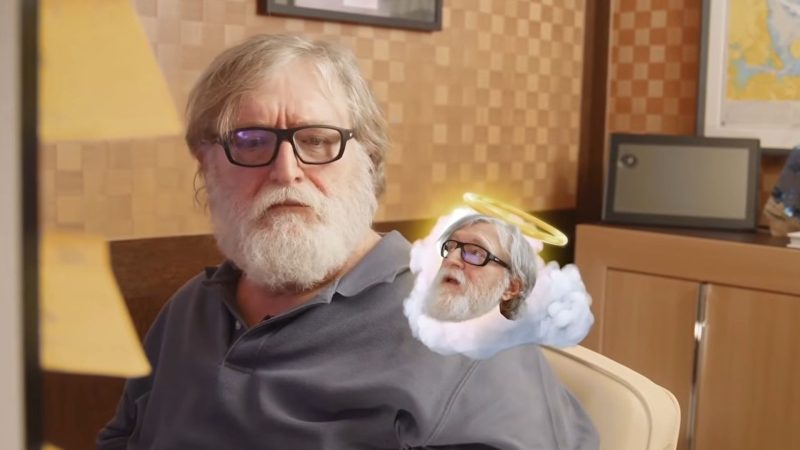
Minh Le, co-creator of Counter-Strike, says Gabe Newell's bad experience with publisher Sierra led him to create Steam. Le recalls early skepticism at Valve about digital distribution.
Ever wonder why Steam exists? According to one of the creators of Counter-Strike, it all started with Gabe Newell saying, "Fuck these publishers." That's the blunt take from Minh Le, who co-created Counter-Strike and later worked at Valve under Newell. In a chat with Indie Game Joe on YouTube, Le explained how Valve's rocky relationship with Sierra, the publisher behind the original Half-Life, left Newell determined to never rely on publishers again.
Sierra published the first Half-Life, but by the time Half-Life 2 rolled around, things had soured so badly that Valve and Sierra ended up in lawsuits going both ways. That bitter experience, Le believes, was the spark that led Newell to dream up Steam. "I think Gabe was the guy who said, 'Fuck these publishers,'" Le recalls. "Working with Sierra was such a bad experience and it left a really sour taste in Gabe's mouth that he wanted to just say, 'Fuck it. I never want to deal with publishers anymore.'"
Steam launched in 2004, and Valve made a bold move: anyone who bought Half-Life 2 had to install Steam. It was a genius way to build an install base for their fledgling digital storefront, riding on the massive hype for the sequel. But not everyone at Valve was convinced it would work. Le remembers plenty of skepticism among his coworkers. "A lot of people at Valve, a lot of my coworkers, we were like, 'Is this going to work?'" he says. "Because this was 2001, 2002. In 2002, peoples' internet was not very good, [it was] very slow."
Back then, buying games meant going to a physical store. Downloading a full game felt impossible. "It's taking me a day just to download Half-Life, this is not gonna work," Le recalls thinking. The team simply couldn't imagine a future where broadband and Wi-Fi would make digital distribution seamless. "We just didn't really anticipate the speed at which the internet would grow," he admits. "Seeing everything change, 25 years on, and watching Steam's evolution has been really eye-opening."
It's wild to think that Steam, now a juggernaut of PC gaming, was born out of pure frustration with the old publishing model. And it almost didn't happen—if the internet hadn't exploded in speed and ubiquity, who knows where we'd be buying our games today. Le's story is a reminder that some of the biggest shifts in gaming come from simple, stubborn decisions: "Never again."
So, what do you think? Would Steam have survived if it launched today with the same skepticism? And are you glad Gabe told publishers where to stick it? Let us know in the comments!
📰 Related Articles
What Scott Lynch's 1,500-Hour Steam Library Says About Game…
Lynch's massive playtime highlights how even acclaimed authors find solace in gaming, and his love for classic titles shows the enduring appeal of old-school PC games.
What the Steam Machine Stock Update Means for Your Wallet
Players who want a Steam Machine can now easily buy the 512GB model, but those holding out for the 2TB version may face higher prices or limited availability.
Sony First-Party Games Hit Record Low Prices on Steam
Steam's latest sale slashes prices on several major titles, including Sony first-party games at historic lows. Check out our curated list of the best deals.
What the Steam Machine Stock Crunch Means for Your Reservati…
Players face tighter Steam Machine supply and uncertain pricing, with the 2TB model especially hard to get and no new waitlists to fall back on. The RAM and storage crunch could keep hardware prices e…
What the Steam vs Epic Sales Gap Means for Indie Devs
The numbers reinforce Steam's dominance for most indie launches, but show Epic's revenue terms can be a major win when a game has a Fortnite-connected hook.
What Steam's Review Backlog Means for Your Wishlist
Indie developers face uncertain launch schedules and potential financial strain, while players may see more release date delays for smaller titles.